Friday, September 23, 2011

How to Calculate Target Heart Rate Zones

Keep things simple with three zones.
    • If you want a quick and convenient method, use the NASM three zone system.  Assign a zone for each metabolic system: the ATP-PC, lactic acid and aerobic system.
Determine the lactic threshold zone first, then aerobic and ATP-PC zones.
    • Lactic threshold can occur anywhere from 75 percent to 85 percent of HRmax (1).  After finding the heart rate that represents lactic threshold, keep the LT zone within a 5% upper and lower limit.
    • My LT Test: If your scared of needles like me, try the test I created to estimate lactic threshold.  Be sure you're cleared by a physician before performing any maximal-effort test.  After a five minute warm up, ride at a maximal, steady effort for 12 minutes.  Why 12 minutes?  The test needs to be short enough to prevent cardiac drift and local muscle fatigue.  Record heart rate at three minute intervals.  The average of the last three measurements will give you a good estimate of lactic threshold.  Add and subtract 5% to create the upper and lower limit of the LT zone.  End the test with a 5-10 minute progressive cool down.
Don't give more than 100 percent.
    • The American College of Sports Medicine found that intensities above 100% HRmax produced smaller improvements in VO2max than intensities that are within 90-100% HRmax (4).  It's also important to consider that intensities above 100% HRmax will also increase the risk of overtraining.
Recovery should feel like recovery.
    • Don't assign a minimum value to the recovery zone.  If 65% HRmax feels too hard, it's ok to go lower, especially if it limits your ability to complete all intervals, or adds fatigue.
If you're exercising just for the health benefits:
    • The ACSM heart rate zones are more appropriate for people new to exercise- not athletes.  The conversions from HRmax to HRR/ VO2R to RPE are very convenient.


Below are the THR zone recommendations from different sources.


Long-Distance Cycling by Dr. Burke & Ed Pavelka.  I was very happy with this book when they mentioned that the border (LT) between zones two and three differs based on individual differences.  An untrained cyclist may hit lactic threshold at 75% and an elite cyclist might reach LT at 85%.  Dr. Burke and Mr. Pavelka gave excellent advice regarding individual differences with LT and I liked that they recommended zones specific to each metabolic system.
  • Zone 1: Recovery = <65% HRmax
  • Zone 2: Aerobic endurance = 65% - 84% HRmax 
  • Zone 3: Lactic threshold = 85% - 94% HRmax
  • Zone 4: Anaerobic = 95% - 100% HRmax
Mastering Cycling by John Howard.  Based on the way the zones were described, it seemed like the heart rate recommendations were based more on opinion than research findings.  I would have liked this section more if the book mentioned that individual differences can throw off all of the ranges and provided suggestions to modify each zone.

Although the heart rate recommendations were a little iffy, I liked that he provided FTP "functional threshold power" recommendations based on Dr. Andrew Coggan and Hunter Allens book called Training and Racing with a Power Meter.  If you're unfamiliar with FTP, it's the maximum amount of power that can be held for an hour.  Unlike lactic threshold and ventilatory threshold, functional threshold power is a measurement of a mechanical variable, not a physiological one.  The functional threshold is the point where heart rate increases and power decreases; in other words, the point where you are fatigued.  Anyway, here are the recommendations below.
  • Zone 1: Active Recovery = 50 - 60% HRmax, ~55% FTP
  • Zone 2: Endurance = 70% HRmax, 56-75% FTP
  • Zone 3: Tempo = 60 - 70% HRmax, 76-90% FTP
  • Zone 4: Sweet Spot = 75 - 80% HRmax, no FTP recommendations...
  • Zone 5: VO2 max = 80 - 85% HRmax, 106-120% FTP
  • Zone 6: Anaerobic Capacity = 85 - 95% HRmax, 121-150% FTP
  • Zone 7: Neuromuscular Power = >95% HRmax, >150% FTP
American College of Sports Medicine, 1998.  Based on 20-60 min for 3-5 days per week.  Interval training programs with intensities 90-100% of VO2max lead to the greatest amount of improvement in VO2max.  Exceeding 100% will produce smaller improvements than the 90 to 100 percent range.
  • Very light: <35% HRmax
    • <20% HRR/ VO2R (<10 RPE)
  • Light: 35-54% HRmax
    • 20-39% HRR/ VO2R (10-11 RPE)
  • Moderate: 55-69% HRmax
    • 40-59% HRR/ VO2R (12-13 RPE)
  • Hard: 70-89% HRmax
    • 60-84% HRR/ VO2R (14-16 RPE)
  • Very Hard: greater than or equal to 90% HRmax
    • Greater than or equal to 85% HRR/ VO2R (17-19 RPE)
  • Maximal: 100% HRmax
    • 100% HRR/ VO2R (20 RPE)
National Academy of Sports Medicine 2010. These ranges were determined through respiratory quotients (RQ).  Respiratory quotient is calculated by dividing the volume of CO2 produced by the volume of O2 consumed.  This is a good way to measure effort and the dominant energy system.
  • Zone 1: Recovery/ Low Intensity = 65-75% HRmax or RQ 0.80-0.90
  • Zone 2: Anaerobic Threshold (AT)/ Higher Intensity = 80-85% HRmax or RQ 0.90-1.0
  • Zone 3: Above AT / High Intensity = 86-90% HRmax or RQ > 1.0

Resources:
  1. Burke, Ed, and Ed. Pavelka.The complete book of long-distance cycling: build the strength, skills, and confidence to ride as far as you want. Emmaus, Pa.: Rodale ;, 2000. Print.
  2. Clark, Micheal, Scott Lucett, and Donald T. Kirkendall.NASM's essentials of sports performance training. Philadelphia: Wolters Kluwer/Lippincott Williams & Wilkins, 2010. Print.
  3. Howard, John. Mastering cycling. Champaign, IL: Human Kinetics, 2010. Print.
  4. Thompson, Walter R., Neil F. Gordon, and Linda S. Pescatello. ACSM's guidelines for exercise testing and prescription. 8th ed. 

Tuesday, September 20, 2011

How To: Heart Rate Training

Determining Max Heart Rate
The most well known equation that estimates maximum heart rate is:

220 - age = HRmax

This equation assumes that everyone loses one beat per minute from their maximum heart rate for every year they get older.  Since this rate of loss does not apply to everyone, this equation has a large standard deviation (+/- 12-15 bpm).  For people younger than 40 years old, this equation underestimates HRmax; for people older than 40 years old, this equation overestimates HRmax (5).

The most accurate HRmax equation (2) is not as easy to remember, but it will give a better estimate than the equation above:

206.9 - (0.67 x age) = HRmax


Target Heart Rate Equations:
The first equation involves simple multiplication:

THR = HRmax * desired percentage

The method below factors resting heart rate into the equation.  For this reason, the equation below is more accurate ONLY if the resting heart rate is measured accurately.  As mentioned in the post about the limitations of heart rate training, several variables may cause heart rate to vary as much as 1 - 6 bpm from day to day (1,3,4).  For this reason, the equation below requires daily updating to account for this variability.  Otherwise, training intensity might be too high or low; potentially targeting the wrong metabolic system, and producing the wrong training effect.

THR = ((HRmax - HRrest) x desired percentage) + HRrest

I recommend using this equation anytime you notice a detectable change in resting heart rate.

Resources:
  1. Astrand, P.-O. and Saltin, B. (1961). Oxygen uptake during the first minutes of heavy muscular exercise. Journal of Applied Physiology, 16, 971-976.
  2. Gellish, RL, Goslin B.R., Olson R.E., McDonald A., Russi G.D., Moudgil V.K. Med Sci Sport Exercise. 2007;39(5):822-9.
  3. Lambert, M.I., Z.H. Mbambo, and A. St Clair Gibson. "Heart rate during training and competition for long-distance running." Journal of Sports Sciences 16 (1998): S85-S90. Print.
  4. Selley, E.A., Kolbe, T., Van Zyl, C.G., Noakes, T.D. and Lambert, M.I. (1995). Running intensity as determined by heart rate is the same in fast and slow runners in both the 10- and 21-k, races. Journal of Sports Sciences, 13, 405-410.
  5. Thompson, Walter R., Neil F. Gordon, and Linda S. Pescatello. ACSM's guidelines for exercise testing and prescription. 8th ed. Philadelphia: Lippincott Williams & Wilkins, 2010. Print.

Wednesday, September 14, 2011

Heart Rate Training Limitations and Phenomena

With the advances in technology, heart rate monitors have the ability to measure heart rate with ECG (electrocardiogram) accuracy.  To get the most out of heart rate training, its important to be aware of various phenomena and limitations leading to misinterpreted data.
  1. 220 - age = HRmax?  Recommended by the American College of Sports Medicine (ACSM) to estimate maximal heart rate, it has a large standard deviation of plus or minus 12-15 bpm (4,5).  I highly recommend using RPE in conjunction with this method to determine if your HR max was under- or overestimated.
  2. Cardiac drift & Training in heat.  Cardiac drift is a phenomena that causes changes in HR and SV (strove volume) to occur when exercise exceeds 30 minutes at the same workload.  With the onset of heat stress, SV drops due to vasodilation, plasma loss, and circulatory changes.  Collectively, this occurs to improve heat removal.  To compensate for lower SV, HR increases to maintain cardiac output (2,3,4).  In a study on competitive cyclists, cardiac drift caused HR to increase by 20 bpm from 20-60 minutes of exercise (2).  The takeaway is that after 30 minutes of constant aerobic exercise at the same intensity, heart rate will increase without a change in effort or RPE.  This also means that temperature and humidity can also affect heart rate significantly since it directly affects thermoregulation.
  3. Dehydration increases heart rate.  During moderate dehydration, it was estimated that for every 1 percent loss of body weight caused by dehydration, heart rate increased 7 beats per minute (1).  A study which required subjects to exercise at 62-67% VO2max for over 100 minutes with no fluid intake found that heart rate increased by 40 bpm (10).  When the subjects were allowed to hydrate, heart rate only increased by 13 bpm (10, 11).  If the difference between hydration and dehydration wasn't clear before, it should be clear now!
  4. Heart rate varies daily.  Under the same workload, heart rate can vary anywhere from 1-6 beats per minute (1,3,6).  This variation may be affected by a combination of things such as the environment, motivation, time of the day, hydration levels, nutrition, sleep and medications (3).  This is another good reason to use RPE to keep workouts honest.
  5. At the same workload, heart rate in competition is higher than in training (6).  Studies have found that during competition, there is no relationship between heart rate and running speed (3,4,5).  In a 10 km distance, heart rate was 163 bpm (+/- 13 bpm) in competition and 143 bpm (+/- 22 bpm) in training (9). Because heart rate values in training are typically lower, runners tend to unerestimate their pace on race day.  A study targeted towards cycling found that cyclists consistently reached higher maximal heart rates in competition compared to the laboratory determined maximum heart rates (4).  Motivation and pacing could explain this variation.  Paying attention to your pre-race nerves can help with deciding whether your heart rate zones need to be shifted higher or lower.
  6. Medications can increase or decrease heart rate.  Stimulants such as caffeine, amphetamines, ephedrine, psudoephedrine and cocaine can also increase heart rate (8).  Beta blockers or Beta-adrenergic blocking agents can lower heart rate (7).
Despite the limitations of heart rate training, heart rate monitors have the potential to provide extremely useful information that can improve the quality of training, track progress and most importantly, prevent overtraining.  As you learn how nutrition, hydration, psychology affects heart rate, the data will become much more reliable for training and racing.


Resources:
  1. Astrand, P.-O. and Saltin, B. (1961). Oxygen uptake during the first minutes of heavy muscular exercise. Journal of Applied Physiology, 16, 971-976.
  2. Jeukendrup, Asker, and Adrie Van Diemen. "Heart rate monitoring during training and competition in cyclist." Journal of Sports Sciences 16 (1998): S91-S99. Print.
  3. Lambert, M.I., Z.H. Mbambo, and A. St Clair Gibson. "Heart rate during training and competition for long-distance running." Journal of Sports Sciences 16 (1998): S85-S90. Print.
  4. Palmer, G. Hawley, J.A., Dennis, S. and Noakes, T.D. (1994). Heart rate response during a 4 day cycle race. Medicine and Science in Sports and Exercise, 26, 1278-1283.
  5. Plowman, Sharon A., and Denise L. Smith. Exercise physiology for health, fitness, and performance. 3rd ed. Philadelphia: Wolters Kluwer Health/Lippincott Williams & Wilkins, 2011. Print.
  6. Selley, E.A., Kolbe, T., Van Zyl, C.G., Noakes, T.D. and Lambert, M.I. (1995). Running intensity as determined by heart rate is the same in fast and slow runners in both the 10- and 21-k, races. Journal of Sports Sciences, 13, 405-410.
  7. Van Camp, S.P. (1998). Pharmacologic factors in exercise and exercise testing. In Resource Manual for Guidelines for Exercise Training and Prescription (edited by S.N. Blair, P. Painter, R.R. Pate, L.K. Smith and C.B. Taylor), pp. 135-152. Philadelphia, PA: Lea and Febiger.
  8. Thomas, J.A. (1998). Drugs, Athletes and Physical Performance, pp. 217-234. New York: Plenum Press.
  9. Wallace, J.: "Principles of cardiorespiratory endurance programming" In: Kaminsky, A. (ed.), ACSM's Resource Manual for Guidelines for Exercise Testing and Prescription Fifth Edition. Philadelphia, PA: Lippincott Williams & Wilkins, 336-349 (2006).
  10. Hamilton, M.T., Gonzales-Alonso, J., Montain, S.J. and Coyle, E.F. (1991). Fluid replacement and glucose infusion during exercise prevent cardiovascular drift. Journal of Applied Physiology, 71, 871-877.
  11. Montain, S.J. and Coyle, E.F. (1992). Fluid ingestion during exercise increases skin blood flow independent of increases in blood volume. Journal of Applied Physiology, 73, 903-910.

Thursday, September 8, 2011

Exercise Metabolic Systems Explainer

We get our energy from food and use that energy to perform work.  The carbohydrates, fats and proteins found in food are eventually converted into a molecule called ATP, the main energy source that allows humans to do work.  We get energy from ATP whenever this molecule loses one phosphate to become ADP.

There are three energy systems that we use to breakdown ATP which vary in dominance based on the intensity.  To determine which metabolic system is in dominance, especially with the lactic acid and aerobic system, heart rate monitors are often used to measure intensity.  Knowledge of heart rate training will allow the user to target specific metabolic systems to produce the desired training effect such as weight loss, reduced resting blood pressure, increased speed, power or overall endurance.  Many times, those with weight loss goals religiously train within the "fat burning" aerobic system and never get the results they want- this occurs mainly because the rate of energy burned is more important than the type of energy burned.  I will go into more detail about weight loss on a separate post.  (Remember that the energy systems don't operate independently, they all operate at the same time, but at different percentages based on the workout.)
  1. ATP-Phosphocreatine Alactic Anaerobic System aka. ATP-PC or ATP-CP: Contributes to short-duration maximal exercises that require power.  This is a very important energy system to train if a sprint to the finish line is your strategy to the podium.
  2. Lactic Acid "LA" system: This system is the dominant ATP manufacturer at the initial start of exercise (1-2 min), accelerations and any time pace is lifted.  It produces energy fast to sustain increased work demands.  Carbohydrate is the primary fuel source.  In racing, strategies called "attacks" or "accelerations" are used by competitive athletes to catch the competition off guard and force them to use CHO when it is least comfortable.  Athletes who can stay in this system longer are said to have a high lactic threshold.
  3. Aerobic "O2" system:  The "cruise-control" system that dominates when the intensity is held at a steady state for (2-5 min).  Fat is the primary fuel source.  In racing, a strong aerobic system coupled with economy and consistency is an advantageous way to save glycogen stores for responses to attacks or to do the attacking.  This is a big reason why VO2max is one of the major contributing factor to success.
1. ATP-PC:
The ATP-PC system is similar to a recycling center because as ATP is broken down into ADP, PC almost instantaneously converts ADP back into ATP.  This system is often called "alactic anaerobic" because neither oxygen or lactic acid is produced.  Although hearing no lactic acid sounds like a dream come true, this system does have a time limit.  After a maximal muscle contraction, the ATP-PC system can only operate for about 10 seconds- it then loses efficiency almost entirely at 20 seconds (1).  

The ATP-PC system is dominant in muscle fibers that have a greater amount of PC compared to ATP.  In terms of muscle stores, there is about three times more PC compared to ATP (2).  Specifically, fast twitch muscle fibers have a greater ratio of PC to ATP compared to slow twitch muscle fibers.  This allows individuals who have a greater percentage of FT muscle fibers to excel in sports such as sprinting and jumping events.

2. Lactic Acid system:
When the ATP-PC system and the O2 system can't meet the energy requirements, the LA system takes over to quickly produce energy.  ATP is mainly produced through glycolysis and glycogenolysis.  Although this system can provide energy quickly, problems involve the rate of lactate production and lactate clearance.  If lactate production is greater than lactate clearance, lactic acid will accumulate and cause discomfort.

The LA system dominates at around one to two minutes of exercise; afterwards, the O2 system takes on more work to generate ATP.
How lactic acid is produced:
  • In order for muscles to contract, calcium must be released from the sarcoplasmic recticulum.  Free calcium eventually activates an enzyme called glycogen phosphorylase, an enzyme that activates glycogenolysis- this process always results in the production of lactic acid with or without oxygen (3, 4).
  • Enzyme activity and mitochondrial density.  Fast twitch muscle fibers have a greater concentration of the enzyme called lactic dehydrogenase.  This enzyme catalyzes pyruvate and NADH + H to produce lactate and NAD+.  As levels of NADH + H and pyruvate increases, so does the activity of this enzyme and the amount of lactic acid produced (5).
  • Glycolysis.  As pyruvate is produced from glycolysis, it is reduced to lactic acid (6, 7,5).
  • Stimulation of the sympathetic nervous system to release epinephrine and glucagon.  As a result of the breakdown of glycogen, a large amount of glucose-6-phosphate (G6P) is produced, a molecule that increases the rate of glycolysis and pyruvic acid.  The increased amount of pyruvic acid is then converted into lactic acid with the help of lactic dehydrogenase (6).
How lactic acid is cleared:
  • Within the liver, lactic acid is converted into glucose through the process, gluconeogenesis.
  • Gluconeogenesis also occurs within FT oxidative glycolytic and FT glycolytic muscle fibers.  Any lactic acid left over within the muscle enters gluconeogenesis to be converted back into glucose (3, 10, 9).
  • Because of the normal PH level of the body, 99% of lactic acid is dissociated immediately into hydrogen protons and lactate anions (11).  Because lactate can pass easily through mitochondria, muscle, blood, active/ inactive muscles and skin, a small amount of lactic acid can pass through the skin with sweat (8).
2. Aerobic System:
ATP is generated through three processes: aerobic glycolysis, the Krebs cycle and the electon transport oxidative phosphorylation process.  The O2 system dominates after approximately two minutes of exercise.  Between one and two minutes, the O2 system and the anaerobic system produces approximately the same amount of ATP (1).  As exercise demands increase, oxygen consumption increases until reaching the maximum amount of oxygen that the O2 system can process.  The maximum amount of oxygen that the O2 system can consume is called the VO2 max.

Resources:
1. Gastin, P.B.: Energy system interaction and relative contribution during maximal exercise. Sports Medicine. 31(10):725-741 (2001).
2. Gollnick, P. D., & D. W. King: Energy release in the muscle cell. Medicine and science in Sports. 1(1):23-31 (1969).
3. Brooks, G.A., T.D. Fahey, T.P. White, & K.M. Baldwin: Exercise Physiology: Human Bioenergetics and Its Applications (3rd edition) Mountain View, CA: Mayfield (1999).
4. Fox, E.L.: Measurement of the maximal lactic (phosphagen) capacity in man. Medicine and Science in Sports (abstract). 5:66 (1973).
5. Spriet, L.L., R.A. Howlett, & G.J.F. Heigenhauser: An enzymatic approach to lactate production in human skeletal muscle during exercise. Medicine and Science in Sports and Exercise 32(4):756-763 (2000).
6. Brooks, G. A.: The lactate shuttle during exercise and recovery. Medicine and Science in Sports and Exercise. 18(3):360-368 (1986).
7. Gasser, G.A., & G.A. Brooks: Muscular efficiency during steady-rate exercise: Effects of speed and work rate. Journal of Applied Physiology. 38(6):1132-1139 (1975).
8. Brooks, G.A.: Intra- and extra-cellular lactate shuttles. Medicine and Science in Sports and Exercise. 32(4):790-700 (2000).
9. Gladden, L.B.: Muscle as a consumer of lactate. Medicine and Science in Sports and Exercise. 32(4):764-771 (2000).
10. Donovan, C.M. & M.J. Pagliassotti: Quantitative assessment of pathways for lactate disposal in skeletal muscle fiber types. Medicine and Science in Sports and Exercise. 32(4):772-777 (2000).
11. Gladden, L.B.: Lactate metabolism: A new paradigm for the third millennium. Journal of Physiology. 558:5-30 (2004).

Wednesday, September 7, 2011

High-Intensity Interval Training (HIIT) Timer

Typically, an interval timer may costs anywhere from $15 to $100+.  Now, interval timers are free as long as you have a smart phone.  There are a lot of interval timer apps on the android market, but many of them either have an obnoxious alarm or fail to alarm if the work and rest intervals are set to 3 and two seconds, respectively.  Short intervals are important for targeting eccentric or concentric muscle contractions to produce the appropriate training effect.  I was surprised to find that this timer could function even if the interval was set to the shortest possible duration (1s work/ 1s rest).

To get the same app, search "hiit interval training timer" on the android market and download the app with the square icon, silhouette of a runner and the letters "HIIT" underneath the trailing leg of the runner.

PROS:
  • It's free!
  • Easy to use
  • No obnoxious alarm at the end of each timer
  • Loud enough to hear outdoors while running or cycling
  • App can operate in the background
CONS:
  • App interface could look better... can't really complain since it's free!

Thursday, September 1, 2011

Lezyne Alloy Floor Drive Pump Review

Updated 8.5.2024

It has been thirteen years and I'm still using this pump!  I replaced the gauge and pump head only because I needed to read higher pressures for my suspension post.  Otherwise, this pump has been completely reliable, and I haven't needed to replace any wear and tear items yet.  Kudos to Lezyne for not practicing planned obsolescence!

Compared to pumps at the same price range, this pump doesn't have proprietary parts; instead, it uses standard O-rings which can be found in virtually any hardware store.  That's mainly what motivated this purchase.


PUMPING EFFORT:
This pump feels very solid and will pump a bicycle tire very fast.  Although it takes time to attach the threaded chuck to the valve, it creates a better seal and guarantees that the valve won't be damaged. On average, it takes one minute to pump both tires.
Edit 8.5.24:  I swapped to the dual pump head with the flip, lock lever, and it has made pumping even faster!


EASY TO USE DESIGN:
Lezyne did a great job with designing this pump so that it would be easy to use and transport.  The hose is about four feet long and slots into the harness located at the base.  The 2.5 inch gauge was easy to read and it was surprisingly more accurate than I expected.  When compared to my dedicated pressure gauge, this pump was within 5 psi of the actual pressure.  Considering that other pumps are usually 15-20 psi off, this is pretty good!  If you have bikes with Presta and Schrader valves, all you have to do is unscrew, and flip the chuck to switch between each valve type.


TIPS FOR THREADED CHUCKS:
If you're new to using threaded chucks, you will probably lose a lot of air as you unscrew the chuck.  To get around this problem, just overinflate the tire 15-20 psi above your target to leave room for error.  You will also want to leave enough room to fine tune the tire pressure with a separate tire pressure gauge.  You'll always lose some air inside a gauge.

PROS:
  • Extremely easy to pump from zero to 250 psi (suspension tuning)
  • Chuck fits onto presta and schrader valves
  • Threaded chuck is leak proof and won't damage your valve
  • The replacement parts are easy to find and inexpensive to replace
  • Nearly 4 foot long hose
  • Fairly accurate gauge +/- 5 psi
CONS:
  • $70 for a pump is a lot to dish out. But in this case, it's the last pump you'd ever need since repairing it is easy and convenient.
  • Looks too nice to get dirty- you'll want to wash your hands before touching the wood handles
  • If you're new to threaded chucks, you will be annoyed during your first dozen attempts of trying to get the pressure right.  Practice!

Tuesday, August 30, 2011

Correct Cycling Posture: The Spine

Updated:  8.3.24

When it comes to posture and back health, pro cyclists aren't the best role models.  That's because low back and knee pain are the most common overuse injuries they experience (3,4).  Despite having access to the most expensive and technologically advanced bike fitting tools, restrictive saddle tilt rules set by the UCI, and deeply rooted cycling culture norms were mostly to blame.  Fortunately, in 2015, four years after I originally created this post, the UCI loosened the saddle rules, allowing time trialists to position the nose down by 10 degrees.  Unfortunately, cycling culture norms and many bike fitters continue to push riders into a level saddle, even if they intend to ride aerodynamically.  This forces riders into a rounded posture rather than a neutral posture, which is a known compensation pattern for those experiencing chronic low back pain.  If you want to ride as aerodynamically as possible without compromising the lower back, it's important to know what a neutral spine is.

NEUTRAL SPINE DEFINED
Good posture means having the two types of normal curves in the spine, lordosis and kyphosis.  When the spine has a healthy amount of these curves, it can efficiently manage the forces of gravity, additional weight, and shocks.  A healthy curvature will also allow the core muscles to rest at a length conducive to producing maximal force (2).  Increasing or decreasing the curvature of the spine also lengthens and shortens the muscles of the core, making stabilization difficult in this imbalanced condition (1,2,3,4,5).  If the core fails to stabilize, the repetitive flexion may lead to herniation of the intervertebral disks (5).

HOW TO DETERMINE NEUTRAL SPINE
While standing with the core relaxed, apply pressure into the core by driving the thumbs into the posterior side and the remaining fingers into the anterior and lateral sides of the core.  This will help detect activation of the core.  Slowly and incrementally adjust pelvic tilt anteriorly, then posteriorly to find the position which allows the core to uniformly disengage (relaxed), and uniformly engage with the belly button pulled in.  This is your neutral spine.  It takes practice to consistently remain in this position on and off the bike.

NEUTRAL SPINE ≠ ANTERIOR PELVIC TILT
A common misconception in cycling is that the pelvis must anteriorly tilt to maintain neutral spine.  This has caused many to believe that a neutral spine will lead to the same low back issues related to an anterior pelvic tilt.

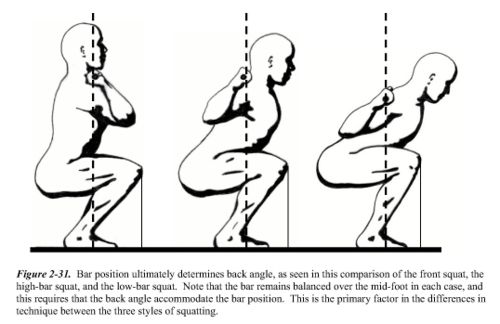
The best way to break this misconception is to look at the motion of the kettlebell swing and squat, and consider the motion of the pelvis relative to the torso.
Kettlebell swing with a neutral spine.Three different types of squats with neutral spine.

When the posture at the start of the lift matches the posture at the bottom of the lift, this indicates no motion at the pelvis; rather, the pelvis tracked with the trunk to maintain the same curvature.  However, if the lumbar spine or low back rounds at the bottom of the lift, then the pelvis tilted posteriorly.  This is commonly known as "butt wink."  If the lumbar spine actively extends at the bottom of the lift, then the pelvis tilted anteriorly.

Next time you ride, pay attention to how your back responds to different riding postures.  If you can maintain a neutral spine on the hoods or tops, but experience rounding in an aero position, your pelvis posteriorly tilted.  If the low back moves into more extension, then the pelvis anteriorly tilted.  The goal is to maintain neutral spine on the hoods or tops, and in the aero position.  This means your pelvis experienced no tilting; it maintained the same position relative to the spine.  This is the outcome to aim for.

SADDLE SHAPE & TILT:
A saddle with a nose must be tilted down 10-15 degrees to give the pelvis enough room to follow the tilt of the trunk (1,2,4).  Otherwise, the nose will create a physical blockade, forcing the pelvis to posteriorly tilt and round the low back.

If it's possible to find a width compatible with your sit bones, noseless saddles provide huge advantages because they do not require nearly as much, or any nose down tilt.  Without the nose, the torso can even tilt below horizontal while remaining fully supported on the saddle.  It will take a long time until cycling culture fully accepts noseless saddles, but the demand is sorely needed to create more successful matches.

SADDLE HEIGHT:
Flexibility and mobility will ultimately determine saddle height.  Cyclists with poor hamstring flexibility will have a flexed or rounded back if the seat is set too high.  This will continue beyond 15 degrees of nose-down tilt.

In severe cases where the saddle must be set too low to protect the spine, working on mobility and flexibility should be the top priority.  As mobility and flexibility improves, reward yourself and your knees by raising the saddle little to utilize the newly acquired range of motion.

SUMMARY:
A neutral spine absorbs shock more efficiently and allows the muscles of the core to function normally.  For those already suffering from lower back pain, 10-15 degrees nose down tilt was enough to bring the spine back into neutral and reduced the incidence and magnitude of low back pain in 80 cyclists (1,2,4).


Resources:
  1. de Vey Mestdagh K. Personal perspective: In search of an optimum cycling posture. Applied Ergonomics 1998; 29; 325-334.
  2. Floyd, R. T.. Manual of structural kinesiology. 17th ed. Boston: Mcgraw-Hill Higher Education, 2009. Print.
  3. Mandy, Marsden, MPhil Sports Physiotherapy, and Schwellnus Martin. "Lower back pain in cyclists: A review of epidemiology, pathomechanics and risk factors." International SportMed Journal 11 (2010): 216-225. Print.
  4. Salai M, Brosh T, Blankstein A, et al. Effect of changing the saddle angle on the incidence of low back pain in recreational bycyclists. Br.J.Sports Med 1999;33: 398-400.
  5. Callaghan, J.P., and McGill, S.M. (2001) Intervertebral disc herniation: Studies on a porcine model exposed to highly repetitive flexion/extension motion with compressive force.  Clinical Biomechanics, 16(1): 28-37
  6. Van Hoof, Wannes, et al. “Comparing Lower Lumbar Kinematics in Cyclists with Low Back Pain (Flexion Pattern) versus Asymptomatic Controls – Field Study Using a Wireless Posture Monitoring System.” Manual Therapy, vol. 17, no. 4, Aug. 2012, pp. 312–317, https://doi.org/10.1016/j.math.2012.02.012.

Caleb Ewan's Sprint Position - Technique Breakdown

Caleb Ewan has been disrupting the sprint scene with a "new" sprinting technique that combines the aerodynamic benefits of a super...